
In its ninth year, Design World’s LEAP Awards recognize the engineering innovations shaping the future of design and technology across a range of categories. Each year, the awards bring together leading OEM design engineers and academics to form an independent judging panel that evaluates the submissions and selects the most outstanding solutions. The program reflects the innovation and expertise driving progress across the engineering community.
This year’s winners in the Embedded Computing category highlight advances in energy-efficient processing, intelligent wireless connectivity, and AI-enabled motor control, showcasing technologies that are pushing the boundaries of embedded system performance to meet the evolving demands of connected devices and intelligent applications.
Congratulations to the LEAP Awards for Embedded Computing winners, who are profiled here:
GOLD
Efficient Computer
Electron E1
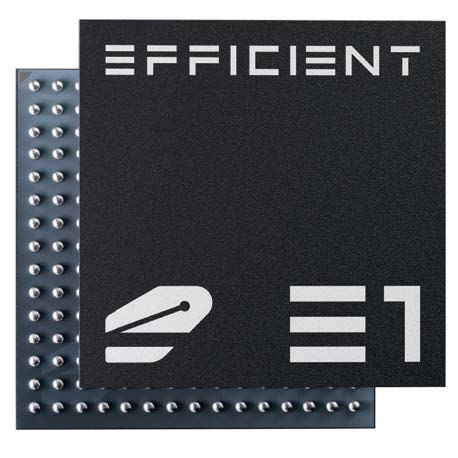
Efficient Computer’s Electron E1 is redefining embedded computing by addressing one of the most pressing challenges in modern electronics: the growing energy demands of increasingly intelligent devices. As artificial intelligence and advanced software move beyond centralized data centers into embedded systems and Physical AI applications, conventional processors can consume significant energy moving data rather than performing useful computation. Built on Efficient Computer’s Fabric spatial dataflow architecture, the Electron E1 combines general-purpose programmability with up to 100× the energy efficiency of conventional processors, enabling devices to operate for years on the same power budget. Paired with the company’s effcc Compiler, the E1 translates standard C/C++ code into Fabric’s spatial representation without requiring manual optimization or code rewrites, giving engineers a more accessible path to developing energy-efficient applications.
The Electron E1 has demonstrated its real-world potential through a commercial deployment with BrightAI, a Physical AI company monitoring infrastructure using sensors, drones, and wearables. In December 2025, Efficient Computer introduced the Electron E1 Evaluation Kit (EVK), enabling engineers to develop and validate applications directly on the processor. By bringing energy-efficient, general-purpose computing to the edge, the E1 enables battery-powered devices to operate for years and systems powered by harvested energy to potentially run indefinitely. These capabilities can reduce maintenance visits and battery replacements while allowing intelligent applications to run locally rather than depend on continuous cloud connectivity. By combining exceptional energy efficiency, software flexibility, and practical deployment capabilities, the Electron E1 provides a foundation for more sustainable embedded systems and makes always-on intelligence increasingly practical across a wide range of applications.
SILVER
Silicon Labs
FG23L Wireless SoC

Silicon Labs’ FG23L Wireless SoC advances low-power wireless connectivity by addressing a fundamental challenge in the Internet of Things (IoT): delivering reliable, long-range communication without compromising battery life, performance, or system cost. As connected devices expand across homes, industrial facilities, and smart cities, engineers need wireless solutions that maintain dependable connections while operating within constrained power budgets. Designed for these demands, the FG23L combines Sub-GHz wireless connectivity, integrated memory, analog peripherals, and a power amplifier in a single-die, multicore system-on-chip. Powered by a 32-bit, 78 MHz Arm Cortex-M33 processor, the device delivers a strong link budget, fast wake-up times, and transmit power up to +20 dBm. Its optimized flash and RAM, efficient architecture, and integrated functionality help simplify system design while providing a cost-effective foundation for reliable IoT connectivity.
The FG23L is designed for applications ranging from home and industrial automation to key fobs and smart city sensor nodes, where long-range communication and low power consumption are essential. Its fast wake-up performance supports energy-conscious operation, while Sub-GHz connectivity enables reliable communication across demanding environments. By integrating processing, memory, and wireless capabilities into a single SoC, Silicon Labs helps engineers balance connectivity, performance, and system cost while reducing design complexity. As IoT deployments become increasingly distributed, the FG23L provides a practical foundation for connected devices that must operate reliably over extended periods with minimal maintenance. Combining processing performance, integrated peripherals, and energy-efficient wireless communication, the FG23L supports the next generation of scalable, dependable embedded IoT solutions.
BRONZE
Texas Instruments
AM13Ex Microcontrollers

Texas Instruments’ AM13Ex microcontrollers are advancing intelligent motor control by addressing a growing challenge in appliances, robotics, and industrial systems: integrating AI-driven capabilities without the complexity and cost of multi-chip designs. Building on more than two decades of motor control expertise through its C2000™ real-time MCU portfolio, TI has developed the industry’s first MCUs to combine a high-performance Arm Cortex-M33 core, TinyEngine™ neural processing unit (NPU), and advanced real-time control architecture in a single chip. This integration enables engineers to implement sophisticated motor control and edge AI simultaneously while reducing bill-of-materials costs by up to 30%. The AM13Ex can maintain precise real-time control loops for up to four motors while its TinyEngine NPU executes adaptive control algorithms for load sensing and energy optimization, bringing intelligent functionality closer to the point of operation.
The AM13Ex family also incorporates a trigonometric math accelerator that performs calculations up to 10 times faster than coordinate rotation digital computer (CORDIC) implementations, supporting more precise and responsive motor control. To simplify AI development, the MCUs are supported by TI’s CCStudio™ Edge AI Studio, a free development environment that helps engineers select, train, optimize, and deploy AI models across TI’s embedded processing portfolio. With support for hardware- or software-based AI implementations and more than 60 available models and application examples, the toolchain helps developers integrate edge intelligence into a broad range of devices. By combining real-time motor control, on-chip neural processing, and accessible AI development tools, Texas Instruments’ AM13Ex MCUs enable more efficient, responsive, and cost-effective intelligent systems, helping engineers bring adaptive control and predictive maintenance capabilities to the next generation of connected appliances, robotics, and industrial equipment.