
A product’s successive generations can debase its original innovative version.
You’re undoubtedly familiar with the Black & Decker Dustbuster, the small, handheld vacuum which has sold in the many millions since first introduced in late 1970s. Originally designed as a small vacuum cleaner dubbed Spot-Vac for the workshop or garage, it didn’t sell well at first.
Then it was literally “picked up” by housewives (hey, we’re talking 1970s here) and found a role in the kitchen and more — so they redesigned it and repositioned it. The Dustbuster has not only succeeded to an extreme, but the term “dustbuster” has become a generic term for an entire category, like Q-tips or Kleenex. Like it or not, that’s a mark of true market acceptance. You a get the full fascinating and documented history at its Wikipedia page.
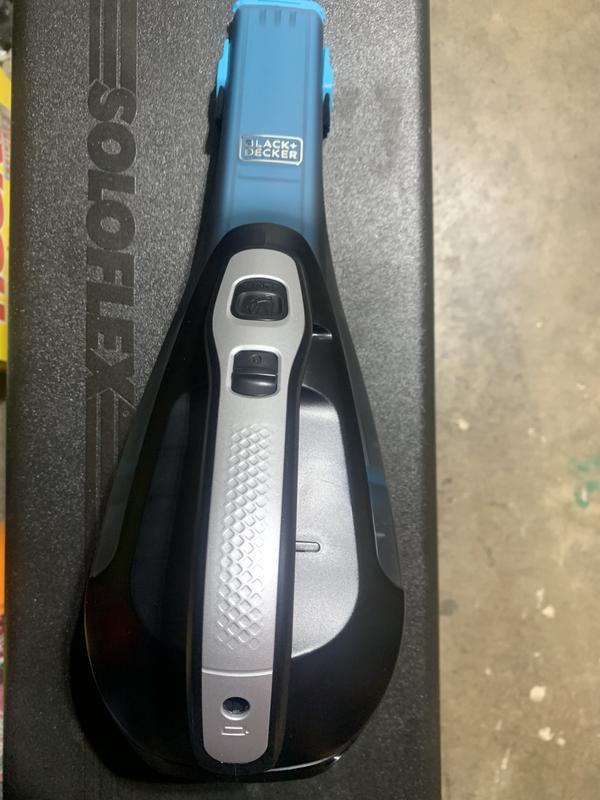
I am now into my fourth dustbuster, Model HLVA315J, seen in Figure 1, in about 20 years and I’ve learned several things:
- It’s possible to design a product with what appears me to be a major shortcoming, yet still succeed to an extreme extent.
- It’s also possible keep designing the cost out of a product, reducing quality with each generation.
Let’s look at these two points in more detail:
For point 1, the rechargeable lithium batteries in the units are not user replaceable. That means that after about five years, when the batteries lose their capacity (mine was down to a useless 10-second run time) you get to throw away the entire unit: case, motor, impeller, and so on. That does seem like a major environmental waste.
I thought perhaps it was only my low-end unit that did not have a replaceable battery pack, but the folks at B&D say “sorry, none of them do” in a brief posted piece (Black and Decker Hand Vacuum Replacement Battery).
I don’t know if the designers considered making those batteries replaceable at a modest cost, or if they preferred to entice you to buy a new unit.
You can replace the battery pack yourself if you are handy and have a lot of time. There are many YouTube videos showing how to do it, but it requires unscrewing the entire case, opening the battery enclosure, removing the lithium battery cells, replacing them (and you will likely have to solder the tabs on each battery contact), then reassembling it. Clearly, this is not for the average consumer.
Rechargeable batteries don’t have to be non-replaceable. I have a small, solidly built rechargeable flashlight (Coast Model 1500, about $18) of Figure 2 that uses a standard z855 battery that is available online for about $10; it just drops into the flashlight case after you unscrew the bottom. Another advantage is that you can even buy some as “spares” that you just charge in the flashlight, then take them out.
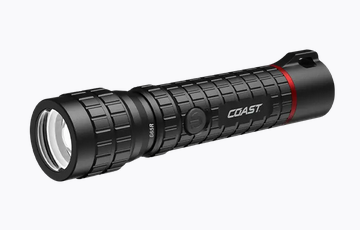
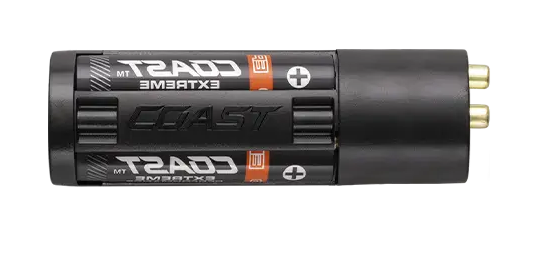
Figure 2. This rechargeable flashlight from Coast Products (right) can also be powered using standard AAA batteries thanks to a small adapter (right). (Image: Coast Products)
What’s especially nice is that if you run down the rechargeable batteries, the flashlight also comes with a small adapter that lets you use three standard AAA non-chargeable batteries (I have seen this scheme used elsewhere, this is just a good example). I wish the Dustbuster had those two options.
For point 2, this latest-generation unit has been cheapened and “down-designed” in several ways. The plastic case is flimsy and bends as you remove or replace the nozzle part which also holds the collected dirt. Unless you hold it just right, when you push the top-side button to release that front part to empty it, the collected dirt falls onto the floor (don’t ask me how I found this out). When you try to re-connect the two pieces, the reconnect is rough and does not have the clean “snap” unless you push hard.
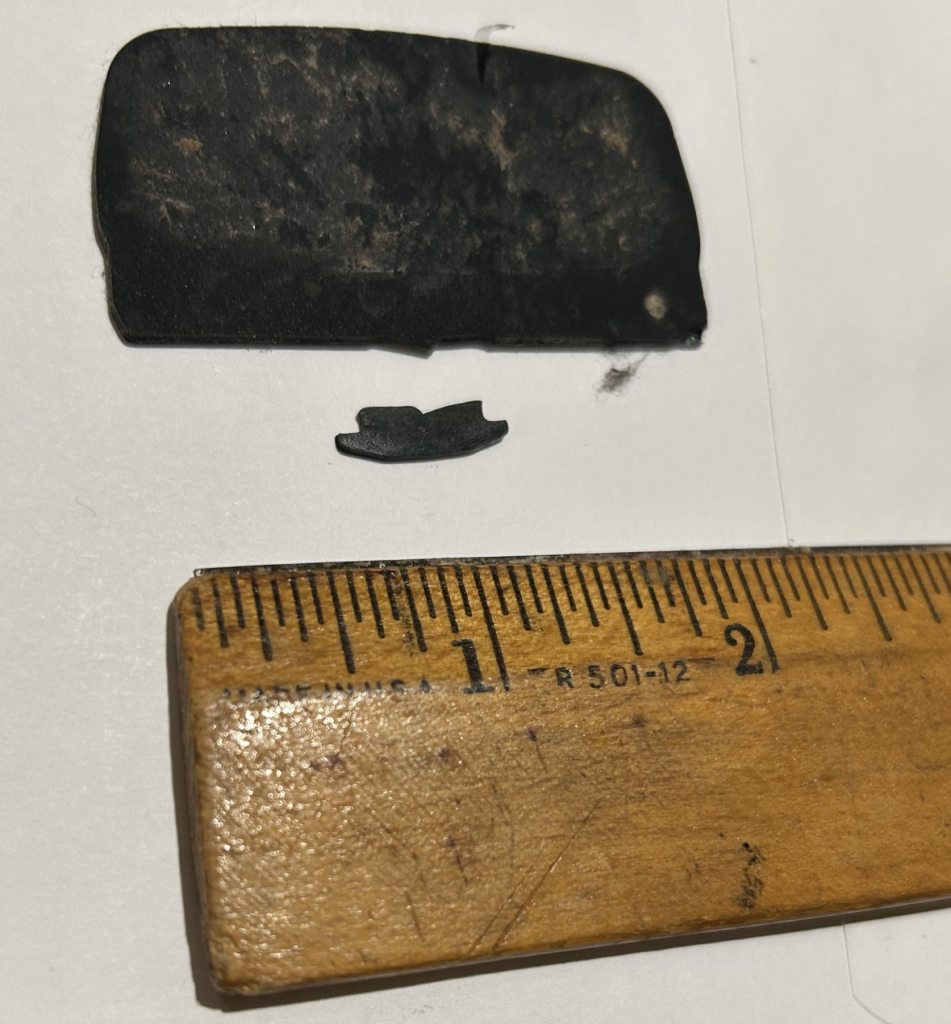
The cheapening continues inside as well. The little flap “doorway” that lets air and dirt in when the unit is in suction mode but closes to keep the dirt in when the unit is off, broke after a year, shown in Figure 3. I refused to toss the unit out solely due to this sort of failure, so I found a piece of semi-stiff plastic with just the right flex, and cut a new flap with scissors and a hobby knife.
Finally, there’s the filter that lets suctioned air through but blocks the collected dirt and dust. My earlier units had a white fiber filter formed as a collection cup that caught and held the dirt until you shook it out. That worked fine, and you could easily get and replace that filter when it was too dirty to clean.
But the new unit has no separate collection cup/filter. Instead, there’s a flat “accordion-like” filter that is supposed to let air through while blocking dirt, leaving it to collect in the body, pictured in Figure 4. The problem is that in the process of doing its job, that flat filter clogs within a few minutes if what you are picking up has dust in it (and yes, there is always dust along with the dirt) so very soon, you get no suction at all, just a lot of noise.
The solution is to open the unit, take out the filter assembly, use a toothpick or similar to “comb out” the trapped dust to clear the filter, or wash it and let it dry. All such fun, after just a few minutes of use, right? While they do sell replacement filters, who wants to have to change it so often?
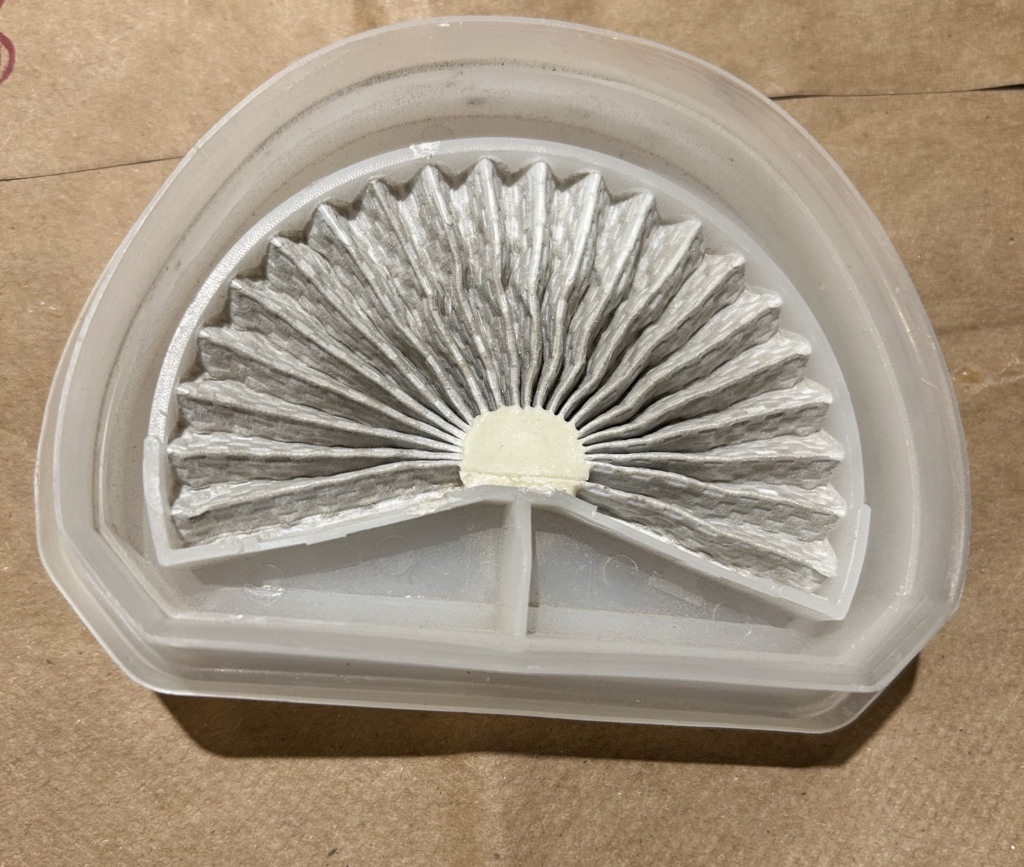
What I think we see here is the relentless push make it cheaper, even if it degrades the product. While this may seem like a smart idea at first, it’s also how a leading product erodes its position over time, inviting competitors with better products to come in and overtake them.
Thinking about filters
I have thought a lot about filters, both electronic and non- electronic, and how most non-electronic ones need regular cleaning or replacement. I wondered about the lack of need to do that in the impressive Inogen Portable Oxygen Concentrator. This unit is a small, three-pound, highly portable battery-powered unit that extracts oxygen from ambient air, and eliminates the need for an oxygen tank for those who need supplemental oxygen.
Among my questions were these: how does so easily filter air to extract the oxygen and boost it from about 20% ambient to about 80% concentration? Do users have to change or clean the oxygen-extraction filter? That seems like a big demand on users, many of whom have limited energy, and so failure to clean/replace the filter could have serious medical consequences.
Instead, the designers of this unit did a very clever thing. They put two identical filters in parallel, and sense when one is saturated as seen in Figure 5.
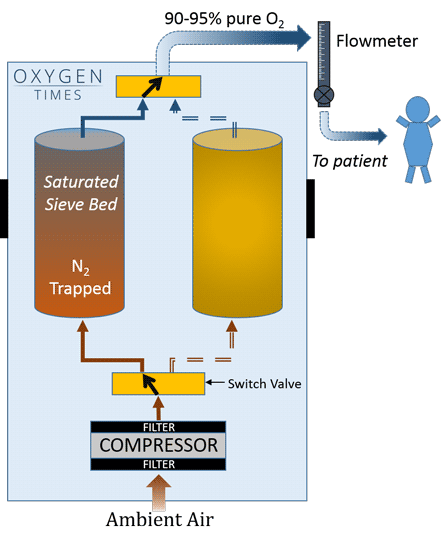
The filtering — or trapping, to be more technically accurate — is not done by absorption or forming a new compound but rather by adsorption, meaning the nitrogen becomes attached to the surface of the zeolite (analogous to a magnet and iron) but it does not form any sort of new molecular combination with it. When the first zeolite filter has reached it maximum adsorption capacity, the unit then automatically switches over to the second filter.
Not familiar with zeolite? The article “Zeolite Clinoptilolite: Therapeutic Virtues of an Ancient Mineral” from the National Institutes of Health/National Library of Medicine will tell you all about it.
That doesn’t answer the question, as the dual-filter approach seems to just delay the inevitable “saturation” of the filter. But that second filter is not a conventional backup. Instead, when that second filter is in use, they reverse flush the full first one to clear it for the next use; when the second one is full, they flush it and go back to the first one, and so on back and forth. This is all done invisibly and unbeknownst to the user, no action is required at all on their part.
I was quite impressed with this epitome of user-friendly design, driven by safety and medical-device mandates.
Conclusion
The down-design of the Dustbuster is not a new story, it’s an old and repeated one. Vendors with innovative, market-leading products are tempted to design-it down, get a few more points of profit margin, and let the succeeding management worry about the longer-term fallout.
I’ve seen this in electronic products, of course, where the case and connectors get cheapened, the power-supply design margin is cut, and inferior components are substituted for the original better ones.
Is this the product analog to Gresham’s law in economics, which states that bad money (inflated or debased) drives out (overwhelms) good money”?
I don’t know, but I do know that my next dustbuster purchase likely won’t be the leading branded one, that’s all I can say.