
Solid-state transformers (SSTs) offer increased performance but require more complex thermal management compared to conventional line frequency transformers (LFTs). That’s due to the reliance of SSTs on active power electronics and the resulting higher power densities. While LFTs operate at 50 or 60 Hz and use simple cooling designs, SSTs operate at tens of kHz and require advanced systems to dissipate concentrated heat.
Copper (IR) losses account for about 60% of heat generation in LFTs, with core losses (hysteresis and eddy currents) accounting for the rest. That means most of the heat generation is evenly dispersed and near the surface, simplifying thermal design.
There are two types of LFTs: dry and oil immersion. Dry LFTs use simple convection cooling and are suitable for lower-power applications, especially in distribution systems, with less challenging thermal conditions.
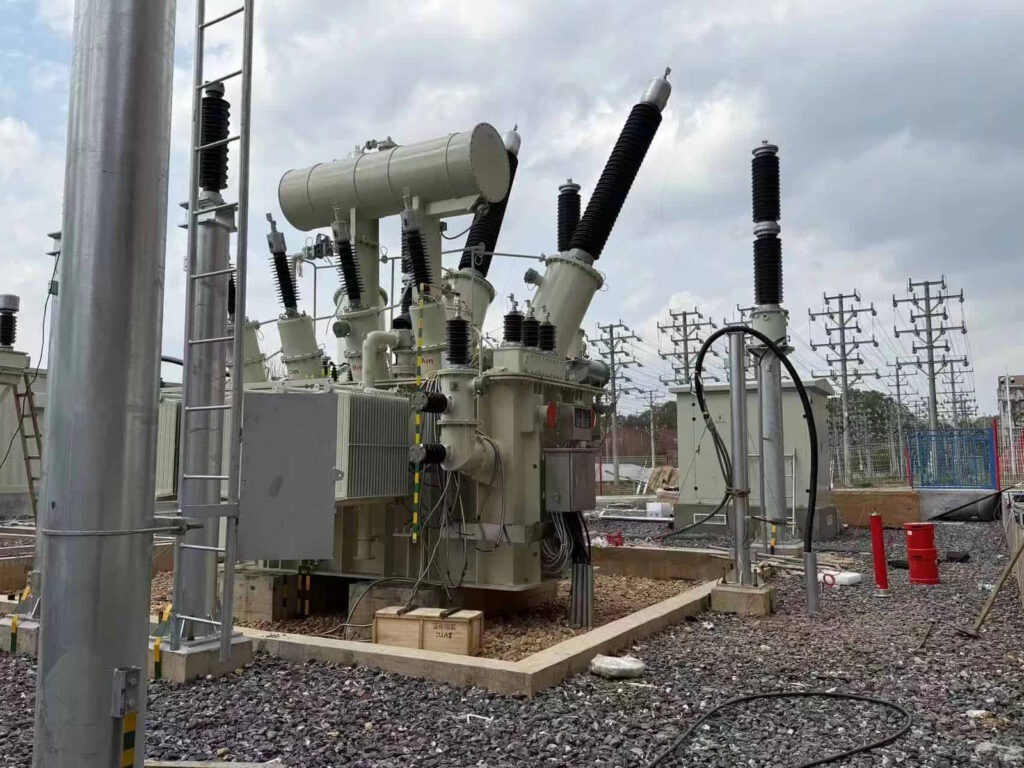
Oil immersion cooling takes two forms, oil natural air natural (ONAN), which is a passive cooling system employing natural convection, conduction, and radiation. For more demanding applications, oil natural air forced (ONAF) is an active system that delivers superior thermal dissipation. Both ONAN and ONAF transformers often include a tank, the conservator tank, on top that acts as an expansion reservoir for the oil (Figure 1).
Concentrated heat
Overall losses in LFTs are about 1%. SSTs are highly efficient electronic power converters, but not as efficient as LFTs, and have losses of 2-3%. That means there’s twice the heat to dissipate. Since SSTs can be one-third the size of LFTs, the greater thermal load is concentrated in a smaller volume.
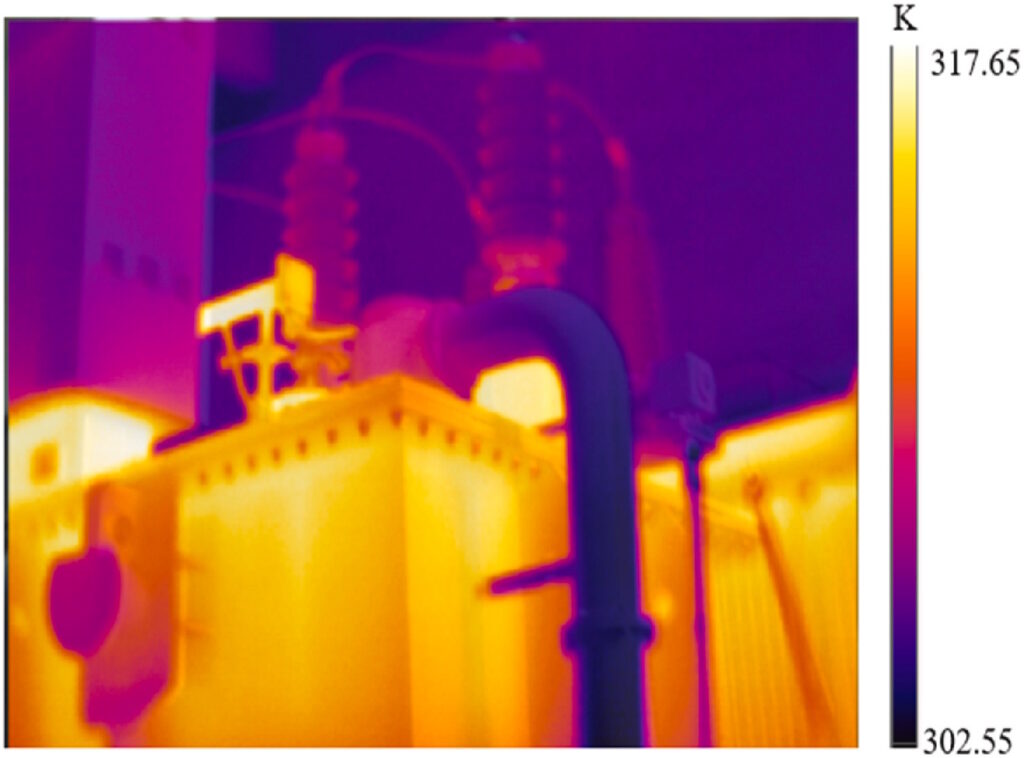
In addition, while the thermal loading in an LFT is relatively evenly distributed (Figure 2), SSTs have very uneven thermal distributions. It’s the unevenness of the thermal distribution that really increases the complexity of SST thermal design.
Where’s the heat?
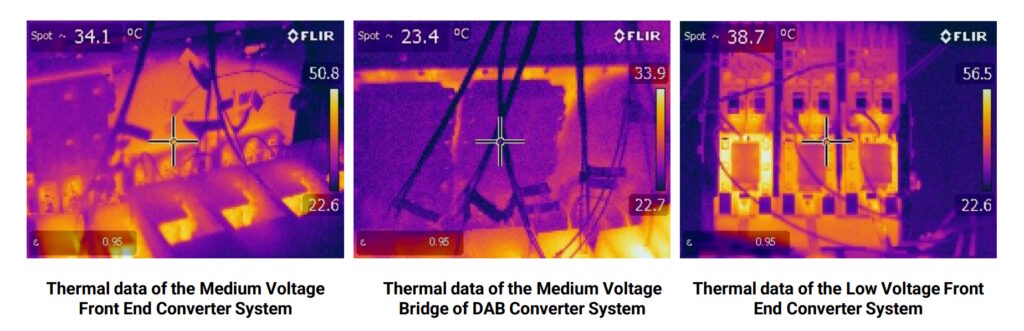
The heat in SSTs is concentrated in relatively inaccessible locations, including the junctions of the power semiconductors and the windings and core of the medium-frequency power transformer. Proper thermal management of those components is mandatory to prevent the heat from impacting more thermally sensitive components like the DC-link capacitors.
The ability to handle thermal cycling caused by rapid load changes or more gradual environmental changes is critical to support the 20–25-year lifespan demanded for SSTs. In most cases, a temperature uniformity of about 10 °C across components is desired to support performance and reliability requirements.
The hottest hot spots are the junctions of the power semiconductors. Some materials, like silicon carbide (SiC), can handle higher junction temperatures, but practical limitations are driven by packaging considerations like wire bond fatigue and packaging delamination. In addition, excessive temperatures for too long can permanently degrade gate oxides and compromise performance.
The medium-frequency transformers (MFTs) used in SSTs operate at tens or hundreds of kilohertz. That makes for a smaller solution, but the MFT must still handle the same power level as the LFT it’s replacing. MFTs experience significantly higher eddy current losses and hysteresis effects (per cycle) than LFTs. The rate of these losses and corresponding heat generation multiplies quickly as operating frequency increases, compounding the thermal management challenge.
Keeping cool
SSTs are available with a variety of thermal management solutions depending on the application demands:
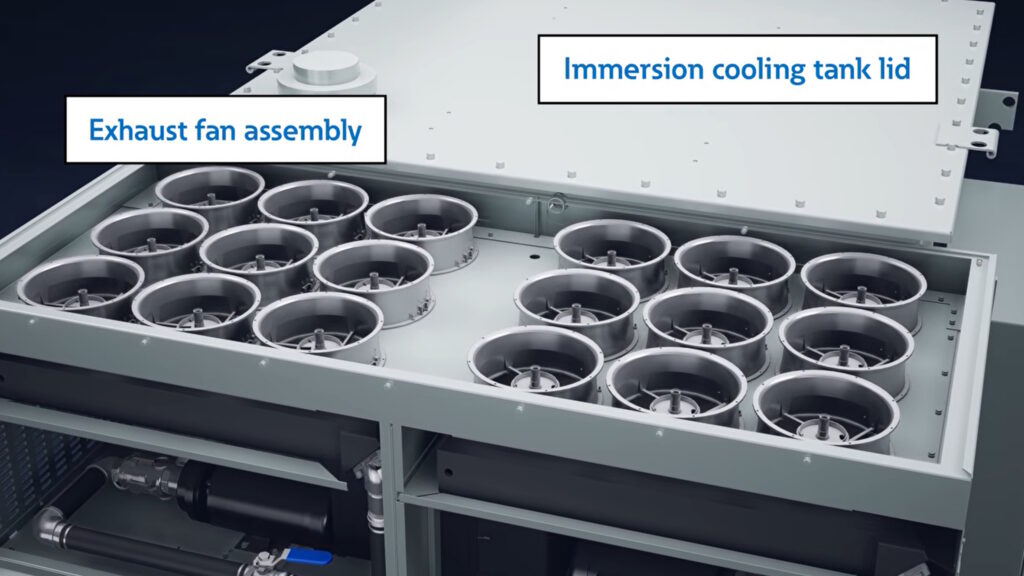
- Immersion cooling based on an FR3 dielectric fluid is used in some high-density, medium-voltage SSTs. This approach dissipates the highest power density in compact solutions (Figure 4).
- Liquid cold plates using a water/glycol blend can provide targeted heat extraction at a lower cost compared with immersion cooling. Power electronic modules are mounted on the cold plate and selectively cooled.
- Forced-air cooling is the least costly and lowest performance option. It’s suited for use in lower-power SST designs where solution size is not a primary consideration.
Sensors and control systems are important considerations for SST thermal management. The sensors provide real-time temperature information that enables the control algorithm to adjust cooling fan speeds, reduce switching frequencies, and, in extreme cases, initiate system shutdown to prevent damage.
Summary
Thermal management is an important consideration in LFTs and SSTs. The higher thermal dissipation and localized heating that characterize SSTs make thermal management much more challenging in those systems. For both types of transformers, various combinations of liquid and forced-air cooling are used.
References
A method for monitoring internal temperature field distribution of transformers based on heat transfer coefficient under different operating conditions, Case Studies in Thermal Engineering
Re-imagining Medium Voltage SST Cooling with Two-Phase Dielectric Fluids, Advanced Cooling Technologies
Smart All-SiC Solid-State Transformers, ETH Zurich
Solid state transformer in energy conversion and distribution: a structured design framework, Energy conversion and management
Solid-State Transformers in the Global Clean Energy Transition: Decarbonization Impact and Lifecycle Performance, MDPI energies
Thermal Management in High-Power Electronics, JLCPCB
What is the Cooling System of an Oil-Immersed Transformer and How Does it Work?, Taishan Transformer
Why Solid-State Transformers are key to the future of power distribution, SuperGrid Institute
Related EEWorld Online content
How is AI being used to improve electric vehicle efficiency?
How can quantum sensors and quantum batteries improve electric vehicle operation?
Transformers for ultrasonic sensing applications
Nano grids, microgrids, and zero net energy consumption
Smart grids, software defined grids, and big data