
ICE vehicles have transitioned from electromechanical power-train subsystems to all-electronic ones.
Fuel-injected systems work differently than carbureted engines, because there is no air mixed with the fuel in the metering system. A servo regulator measures airflow entering the engine and meters fuel accordingly for the proper mixture.
Depending on the particular system, the fuel injector sprays fuel just outside of the cylinder head at the inlet manifold or the inlet port via an injector. The fuel is vaporized and mixed with air just before entering the cylinder.
Figure 1 shows how fuel is moved from the tank to the engine cylinders via electronic control. The fuel pump (usually located in the tank) pushes fuel through a filter and then to the fuel rail (analogous to a power-supply rail). The fuel pressure regulator maintains a consistent pressure, needed to ensure consistent fuel metering; any excess fuel is sent back to the tank via a fuel return line.
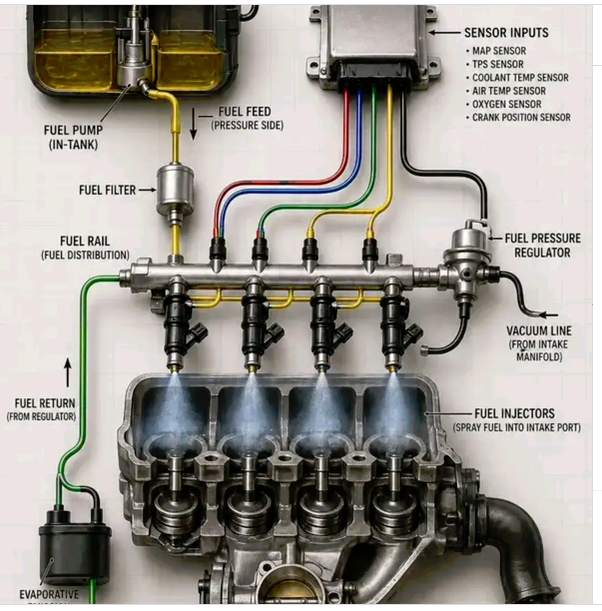
The ECU (Electronic Control Unit) processes data from various sensor Inputs to determine the precise timing and amount of fuel needed. Among these are:
- Manifold absolute pressure (MAP) sensor, which measures the air pressure inside the intake manifold and acts as an engine load indicator.
- Throttle position sensor (TPS) is mounted on the throttle body and tracks the exact angle of the throttle valve, and helps the ECU adjust the air-fuel mixture and spark timing.
- The car oxygen (O₂) sensor measures the amount of unburnt oxygen in the vehicle’s exhaust gases and sends that data to the ECU to fine-tune the air-fuel mixture.
- The coolant temperature sensor, also called a coolant temperature sending unit (CTSU) or ECT sensor, tells the ECU how hot the engine is running. It uses these readings to manage fuel-air mixtures on cold starts, idle speed, ignition timing, and even an electric cooling fan.
- The intake air temperature (IAT) sensor is a small thermistor device located in the air intake duct, air filter housing, or intake manifold to measure the temperature of the air entering the engine. Cold air is dense and needs more fuel (rich mixture), while hot air is thin and needs less (leaner mixture). The ECU uses this to adjust the fuel injection ratio.
Note: pre-1960s cars had a manually operated “choke” which allowed the driver to adjust this ratio, with a “cold” setting used when starting, and another “hot” setting used when running. It was replaced in the 1960s by an automatic, mechanically driven choke for rich/lean setting, and now is done invisibly as the ECU manages the process.
- Crankshaft position sensor (CKP sensor) tracks the exact rotational speed and position of the engine’s crankshaft. It sends this real-time data to the ECU, which uses it to precisely time fuel injection and spark plug ignition.
Based on ECU signals, the fuel injectors spray a fine mist of fuel into the intake ports, where it mixes with incoming air before entering the combustion chamber and is ignited by the spark plug discharge.
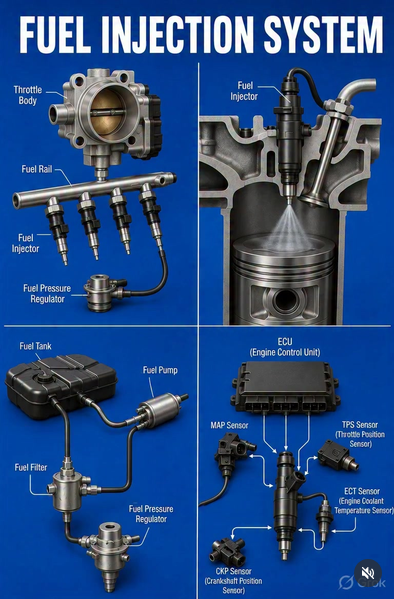
Figure 2 provides another perspective on the physical parts that comprise an EFI system,
There are two primary types of fuel-injection systems: throttle body injection (TBI) and port fuel injection, as well as sub-types. We will not discuss their differences and specifics here.
Carburetor versus fuel injection
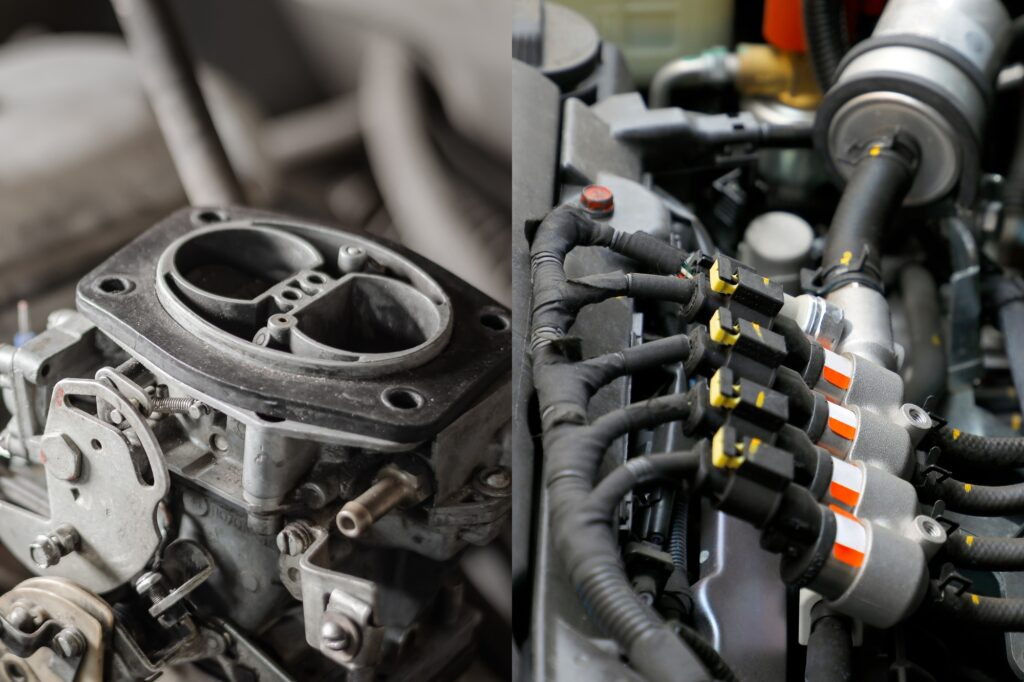
The comparative relationship between the carburetor and EFI is similar in many ways to the one between a carburetor and EFI, with EFI having many advantages over the carburetor. Figure 3 shows the dramatic physical differences in appearance between the two.
- Fuel-injection systems can deliver a more precise air-fuel ratio than carburetors because of their electronically controlled fuel-injection capabilities.
- In contrast, carburetors struggle with this challenge, especially when the air pressure and fuel temperature are constantly changing.
- The precision of measuring the correct air-fuel ratio means that fuel-injection systems don’t waste as much fuel as carbureted engines.
- On the other side, carburetors are relatively inexpensive to maintain. Fuel-injection systems, on the other hand, can be quite complicated and have no user-serviceable parts inside; it’s “remove and replace.”
- As with the points and distributor of the ignition system, maintenance is one of the areas where old-fashioned carburetors are better than fuel-injection systems. The carburetor is a separate, independent component from the engine, making it easier to clean, adjust, and modify.
- Fuel-injection systems are more complex and require a skilled DIY amateur or professional to have them cleaned or replaced.
Conclusion
There’s no doubt that electronic ignition and fuel injection for ICE vehicles offer many performance advantages compared to older, mostly electromechanical systems with respect to performance, efficiency, reduced routine maintenance, and overall reliability. On the other hand, those older implementations for these basic functions were much more amenable to user adjustment and repair.
The path to all-electronic functions was not easy or quick. Although these functions may be conceptually straightforward, there are many unavoidable issues and subtleties in the world of air, gasoline, sparks, and more — a look at any actual system shows all the add-ons and contrivances that need to be added to make it all actually work. In addition, there are the usual automotive considerations and issues of ruggedness, operating environment, power surges and load dumps, start-up/shutdown, and similar with which to contend.
Talk to auto mechanics with over, say, 30 to 40 years of experience, and they will either reminisce about the “good old days” when you could get into the spark-ignition system to fix or even enhance it, or they will curse those old systems with their idiosyncrasies and limitations.
In contrast, talk to those with five, ten, or even twenty years of experience about distributors, breakers, condensers, points, carburetors, and butterfly valves, and they will likely not know what you are talking about (unless they are classic-car enthusiasts).
One thing is clear: things have changed dramatically and irreversibly. There is no going back, and the next phase may even include replacement of the humble, standard copper spark plug ($5 to $20 each) with a controllable laser (unknown cost, of course) that ignites the fuel/air mix.
References
Distributors: Points vs. Electronic Ignition, JBugs
Electronic Ignition vs. Points, YouTube
Three Types of Vehicle Ignition Systems and How They Work, Advance Auto Parts
What Is the Difference Between Conventional, Electronic and Distributor-less Ignition Systems?, Your Mechanic
Understanding Breaker Point Ignition Systems, Gas Engine Magazine
Electronic Ignition System: Definition, Parts, Working, Advantages, Application, The Mechanical Engineering
Ignition Systems, Clemson University
How Ignition Systems Work, Champion Auto Parts
Delco ignition system, Wikipedia
A Beginner’s Guide to Fuel-Injected vs. Carbureted Engines, CarParts.com
Carburetor vs Fuel Injector, Goldfarb & Associates
The Pros And Cons Of Carbureted vs. Fuel Injected Engines, Boldmethod LLC
Carburetor vs. Fuel Injection: What’s the Difference and Which Is Better?, I Evil Energy
How a fuel injection system works, How A Car Works
Forget the Spark Plug: Use a Laser to Ignite ICE Gasoline, Electronic Design
Related EEWorld Online content
FAQ on magnetos for power and ignition: part 1
FAQ on magnetos for power and ignition: part 2
Automotive platform consolidates functions on one ECU
Reference design covers ECUs for electronic fuel injection
The Wright brothers: engineers, scientists, and yes, even bicycle mechanics, Pt 1
The Wright brothers: engineers, scientists, and yes, bicycle mechanics, Part 2