
The complexity of so many of our daily products has its downside, but we can still win small victories.
I’ve recently had a run of bad luck with the various technology-based products on which we depend so heavily. Whether this is just a coincidence or the technology gods decided it was my turn, I can’t say (there doesn’t seem to be a connection, but you never can be sure with these things).
What I can say is that each has been frustrating, and their sum has consumed a lot of mental bandwidth and actual time; I am sure anyone who has had similar problems can confirm that observation. A partial list of problems shows these:
- Microsoft Outlook would not open or would open and freeze on a one-year-old desktop PC. Our local PC repair wizard took care of it.
- After a nearby thunderstorm, that same PC would start booting up, but not fully boot. (Again, some CPR from the local PC repair fellow took care of that.)
- At 50,000 miles, my 12-V ICE car’s battery repeatedly died; it turned out it was unrelated to mileage. Instead, it was a “known” but kept-secret software bug. 3G cellular service is being phased out (or “sunsetted” in industry parlance), yet despite this, the car’s 3G transponder, formally called a Telematics Data Communication Module (TDCM or DCM), just kept trying to connect to a 3G tower, thus killing the battery. The dealer was apologetic and replaced the 3G unit at no cost with a 4G-compatible unit that they conveniently had in stock. I suspect they were prepared for this occurrence all along and were hoping to keep it quiet.
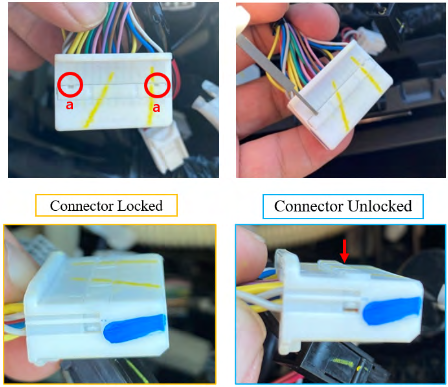
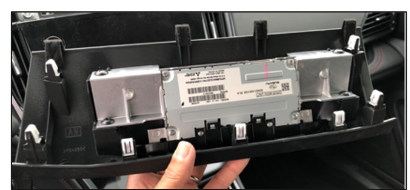
If I had tried to DIY the fix, it would have taken at least an hour for physical access, setup, software initialization, and check-out – if you know what you are doing. There are many caveats in the 12-page DCM section for removal and replacement of the module, shown in Figure 1, as well as in the companion 14-page guide for the alternative Data Communication Module (DCM) Bypass Box of Figure 2, which details some tricky wire-harness connectors that can be ruined if you don’t disconnect them just right.
At 60,000 miles, the battery again died repeatedly. In this case, it seems the module that puts the other modules into their quiescent state when the car is supposed to be “off” and thus minimizes the vampire current drain wasn’t telling them to do so. Again, a replacement module was covered under a “secret” warranty.
My four-year-old heating system popped its circuit breaker on a cold winter day, and resetting the breaker did not help. The service technicians could not find anything wrong (that had me especially worried), but they made some minor adjustments to the water-pump setting, and so far, it’s been fine. Nonetheless, it’s a source of long-term worry.
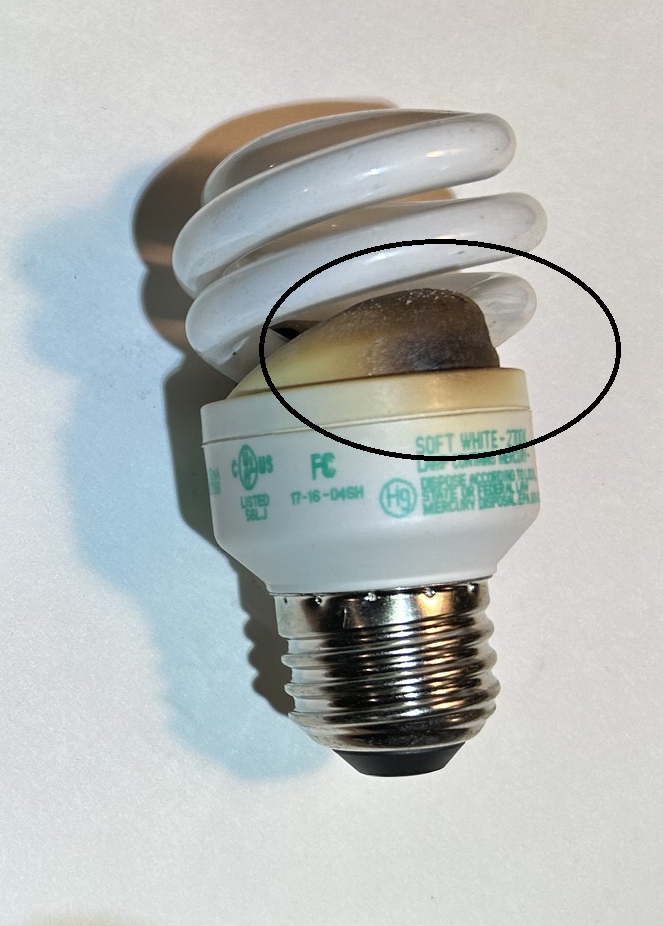
A compact fluorescent bulb (CFL) that has been in a hallway ceiling fixture for many years decided to start smoking and scorched its Bakelite socket, Figure 3 (These were heralded as the future of lighting and were for a few years, then LED bulbs came down in price and in performance, and CFLs left the stage). Whether that fixture, insulation, or nearby beams would have actually caught fire, I can’t say, but I considered myself lucky. I replaced the charred socket assembly.
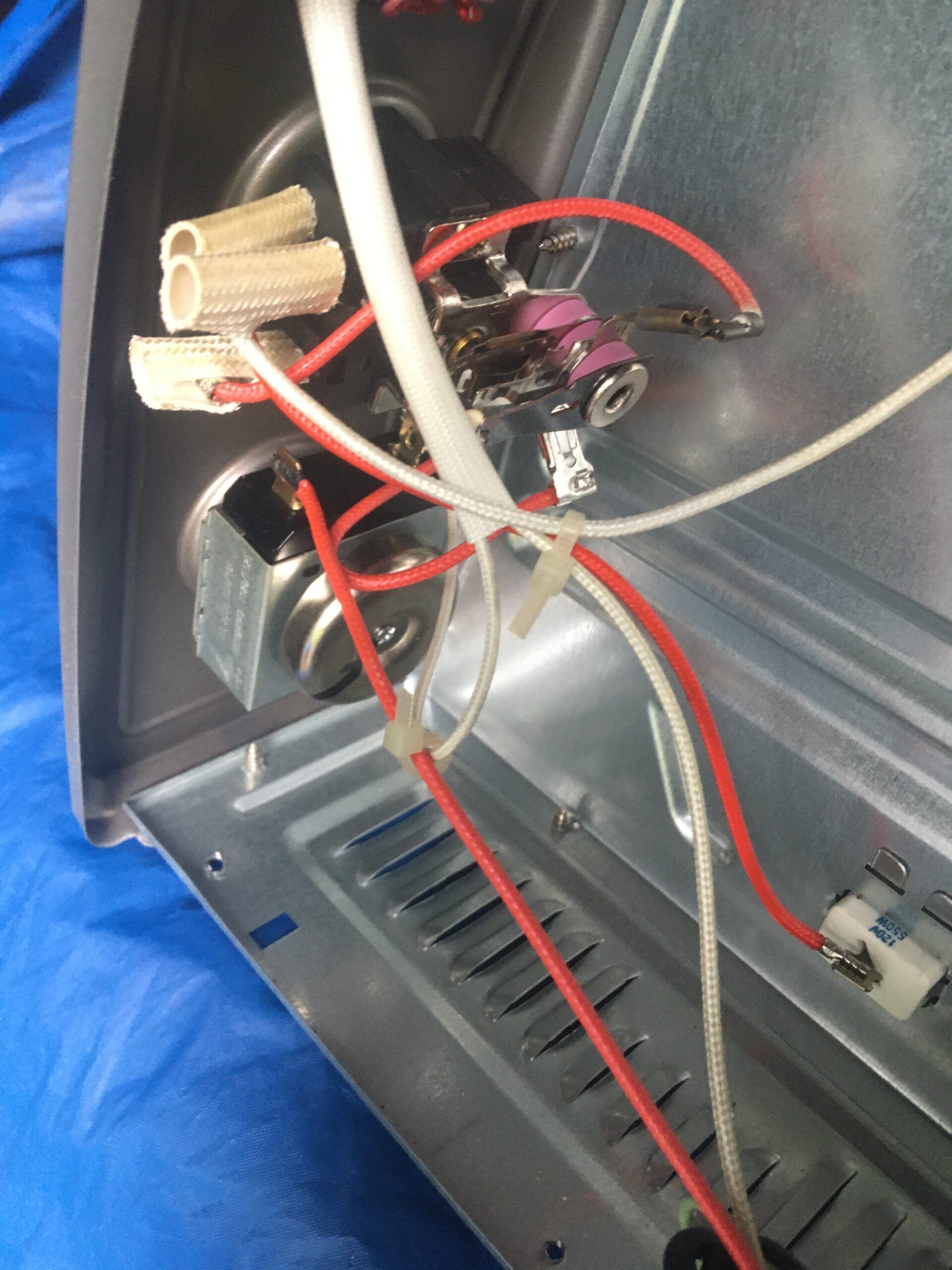
Finally, my four-year-old, basic, 100% non-electronic toaster-oven also died after five years of hard use. To my surprise, it was not the heating element that burned out. Instead, it was the mechanical spring-wound timer that broke, seen in Figure 4.
I could give you many other examples, but you get the point. None of these malfunctions or outright failures is unusual by itself, nor totally unexpected. Stuff like this happens all the time; it’s just the accumulation of aggravations that can get to you.
Perhaps worst of all is the helpless feeling associated with many of the these problems; after all, who has the time to become a fix-it expert is all the required disciplines, and replacing a defective car module – assuming you know which one and can get a replacement – is usually a time-consuming task, even if you are “up for it” and have not much else to do.
What are my options here?
What can I do about all this? Unfortunately, not much; I need to have a PC, a car, and a heating system. I can’t get rid of most of the advanced technology in the car.
At the risk of sounding like an anti-tech activist, I would prefer a car where “off” meant off, meaning the battery was physically disconnected and there would be no vampire drain. I’d also like its many functions – ignition, power train, radio, and driver’s console, windows – to be more independent so they can easily be isolated and debugged when the time comes, rather than having an integrated, intertwined system-level arrangement where a fault results in a nasty ripple effect. It almost sounds as if I am longing for the cars of the 1950s and 1960s.
What I would not do is get a car like the recently introduced Hyundai Genesis GV80 SUV. Why not? Among its many complications, excuse me, features are driver’s seat, g-sensing, dynamic side bolsters that “nudge” the driver’s ribs at every turn; active suspension damping (as opposed to reactive damping) where the vehicle’s dampers adjust the suspension near-instantly according to the camera feed monitoring the road ahead; heated center-console armrests; and active noise cancellation, to cite just a few.
Individually, these may be nice features, but I’ll wager that at any given time, one or more of these will have a subtle design flaw that only appears once the car has been driven for a while, hits a “corner case” scenario, or will suffer an outright failure, so the car will be at the dealer as a regular guest.
But I can take small steps in some cases. For example, when looking for a replacement toaster oven, I considered and read reviews of ones with digital temperature readout, time-of-day clock, and timers to set, Wi-Fi access, and other smart features, in prices ranging from about $50 to several hundred dollars.
Then I decided to keep it simple and get the same basic, no-frills Black and Decker model I had, as pictured in Figure 5, still available after all these years, and good enough for my needs.
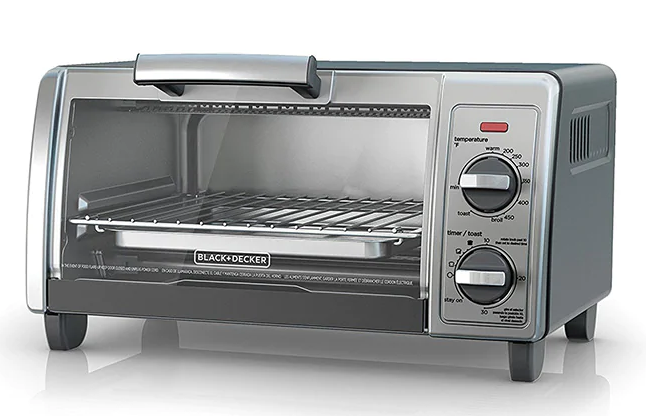
So, I say, “Thank you, Black and Decker.” After all, there are times when “good enough” really is good enough.
References
Telematics Data Communication Module, Subaru of America
Data Communication Module (DCM) Bypass Box, Subaru of America
Toaster Ovens, Black and Decker
Related EEWorld Online content
LED GU24 lamp acts as replacement for 13W CFL
Emulator lets engineers test 2G/3G/4G telecom networks
Video of the Day: Building A Better Toaster
Don’t push on that icon and other 3G sunset issues